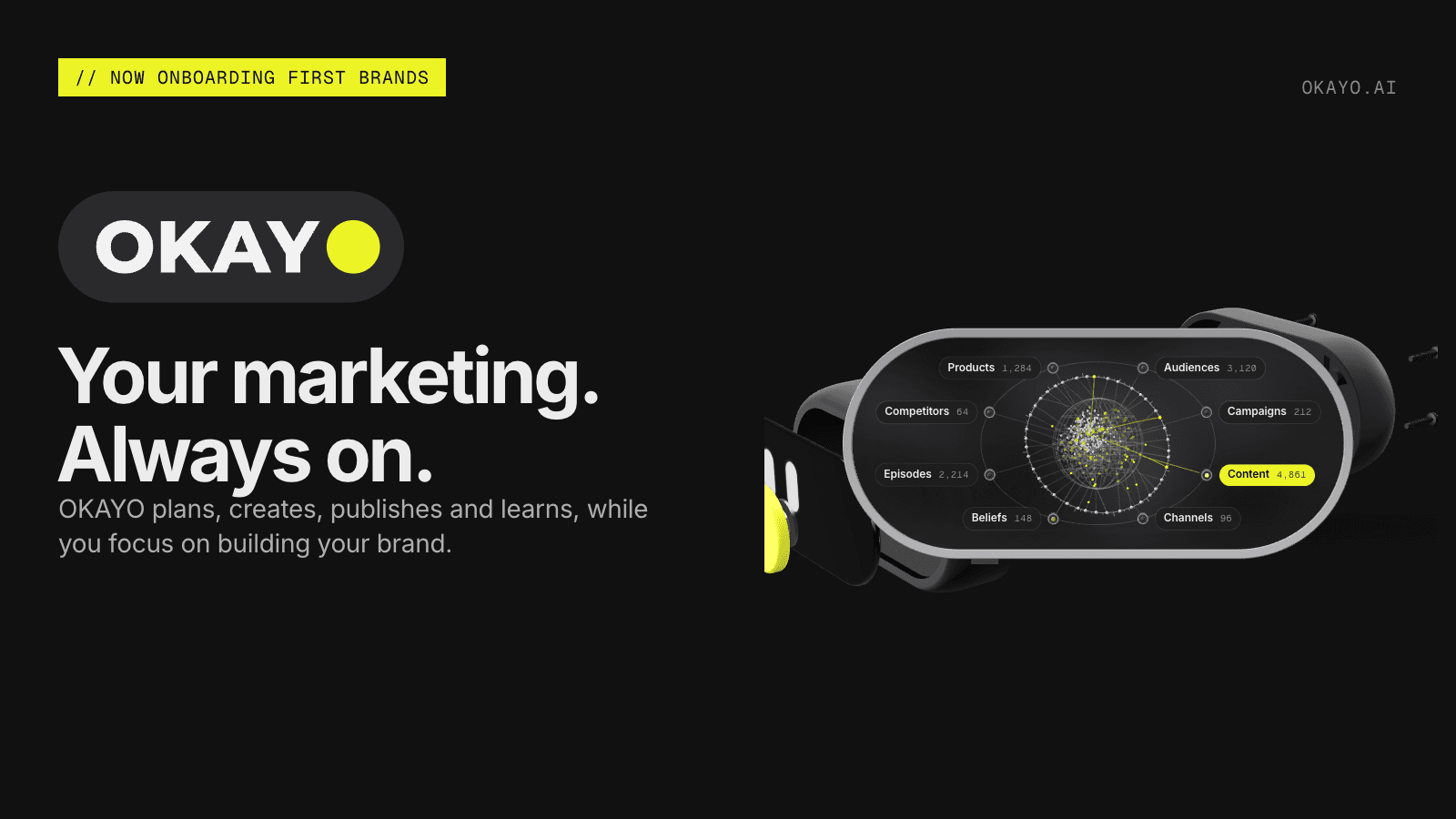
I founded OKAYO and designed it as a marketing operating system: one agent per brand, with a persistent memory of products, voice, looks and what has already worked. You talk to it in chat. It drafts posts, images, video, ads and email, schedules them across the channels you connect, and comes back with a morning report of what happened and what it changed.
As of OKAYO 1.3 it has hands. Long jobs run in the background on a computer of its own, with a browser, so it can research, work with files and return when something needs you. Workflows and routines are maps you can build, schedule and repair yourself. Advertising stays on the ad accounts you connect, inside a budget you set. Nothing is published and no money is spent without approval, unless you have explicitly switched that kind of work to autopilot.
OKAYO is live at okayo.ai and is now onboarding its first brands.
Key capabilities
- 01Plan, write and make posts, carousels, reels, articles, email and blog content in the brand's voice
- 02Publish from one queue to 13 social platforms, plus a website or Shopify blog, and Klaviyo campaign drafts
- 03Paid media on Meta, LinkedIn, Pinterest and Google Ads, always behind approval and a spend cap
- 04Brand memory, a daily report, and learning from what you approve, edit or reject
- 05Background tasks with a dedicated computer and browser
- 06Plays (proven methods) and workflows you can build, nest, rerun and schedule
- 07Generated images and video marked with Content Credentials, and a public check page
Stack
TypeScript monorepo on Next.js 16, React, Bun and Turborepo. PostgreSQL and Drizzle. Clerk for auth, Stripe for billing. Brand memory on a temporal knowledge graph (Graphiti and FalkorDB). Agent runtime with a computer and browser, plus a workflow canvas. Vercel, Cloudflare R2, Sentry.