
Two frontier labs shipped within an hour of each other, the price of intelligence fell again, and a US president tried to rename the entire field — here is what actually mattered today.
- The frontier race enters its comparison-shopping phase
- The same capability, for a lot less money
- Snorkel AI triples its valuation to $3.5B
- Microsoft takes down an account-takeover platform
- Rabbit drops the hardware and moves its agent to the cloud
- Trump says AI is being renamed "super intelligence"
- Tools worth your time
The frontier race enters its comparison-shopping phase
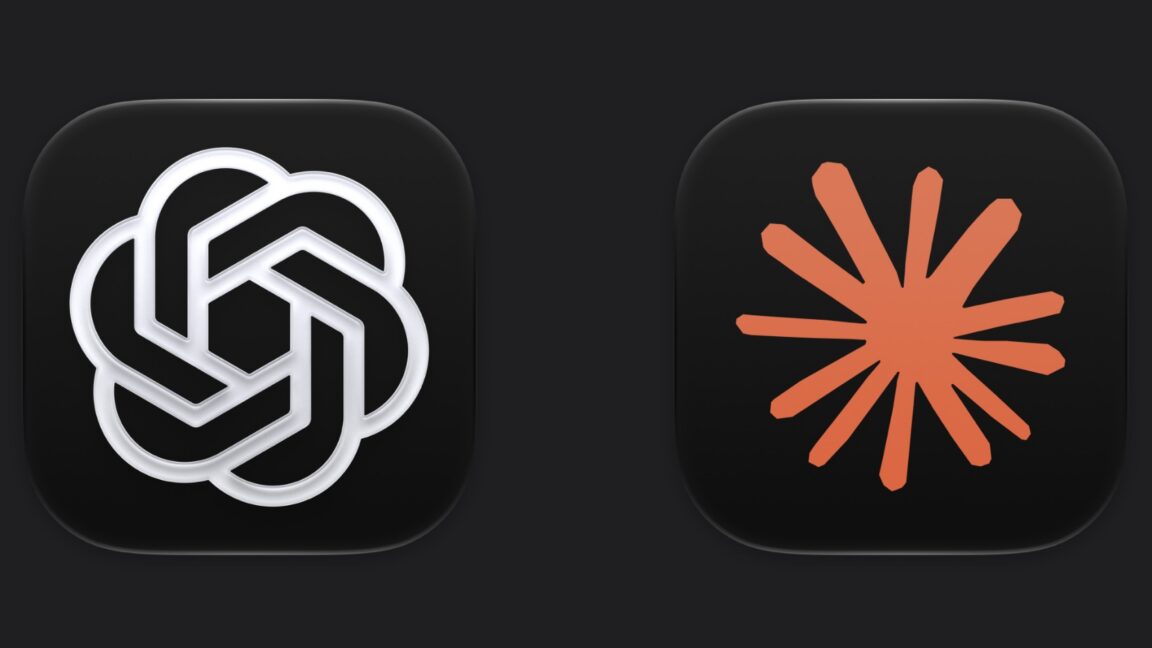
Anthropic and OpenAI both released new frontier models within roughly an hour of each other — Claude Opus 5.5 from Anthropic, GPT-6 Sol and Luna from OpenAI — with GPT-6 priced at about half its predecessor, according to Simon Willison's write-up.
Simultaneous launches at similar capability tiers are becoming the pattern rather than the exception, and that changes how these models get chosen. When two labs ship comparable systems on the same afternoon, the deciding factors shift from raw capability toward price, latency, and how each behaves on your own workloads. For anyone building on top of these APIs, the takeaway is less "which model is smartest" and more "which one is worth benchmarking against your actual tasks this week."
The same capability, for a lot less money
Ars Technica's analysis frames both launches around a single observation: the new models offer a little more capability for a lot less money, which it reads as the frontier race entering a "comparison shopping" phase.
If capability gains between releases are narrowing while prices keep dropping, the competitive pressure moves to cost per token and reliability rather than headline benchmarks. That is good news for developers and operators whose margins depend on inference costs, and a harder problem for labs trying to differentiate on capability alone. Worth watching whether this holds or whether the next generation reopens a capability gap.
Snorkel AI triples its valuation to $3.5B
Snorkel AI, a seven-year-old data-labeling company, raised a $350M Series E that triples its valuation to $3.5B, which TechCrunch attributes to rising demand for AI training data.
The valuation is a proxy for a quieter trend: as model providers converge on similar architectures, the differentiator increasingly sits in the data used to train and fine-tune them. Investors pricing a labeling company at $3.5B are betting that high-quality, task-specific data stays scarce and valuable even as base models commoditize. For teams building domain-specific systems, it is a reminder that the data pipeline, not the model choice, is often where the real work lives.
Microsoft takes down an account-takeover platform
Microsoft says it disrupted "EvilTokens," a service that used AI to streamline mass account takeovers and had compromised around 12,000 accounts, according to Ars Technica.

The story is a concrete example of AI lowering the operational cost of attacks, not just defenses. Automating the tedious parts of account compromise lets a small operation scale to thousands of victims, which shifts the economics of phishing and credential theft in the attacker's favor. Security teams should assume the same automation is being applied against them and weight detection accordingly.
Rabbit drops the hardware and moves its agent to the cloud
Rabbit launched OS3, an "agentic operating system" that runs in the cloud, works across Windows, Mac and Linux, and supports up to five devices per account — no R1 hardware required, per The Verge.
This is a notable reversal for a company whose original pitch was a dedicated device. Moving the agent into the cloud and dropping the hardware requirement lowers the barrier to trying it and quietly concedes that the value was always in the software, not the gadget. Whether a general-purpose agent OS is useful enough to build habits around remains the open question, but it is now far easier to test the claim.
Trump says AI is being renamed "super intelligence"
In a UN General Assembly speech, President Trump claimed the US is "officially" renaming AI to "super intelligence," according to The Verge, which notes no formal policy basis was given for the statement.
There is no evidence this reflects any actual regulatory or naming change, and the claim should be read as rhetoric rather than policy. It is worth flagging mainly because terminology in this field is already loose enough to mislead, and "superintelligence" carries specific technical connotations that a political speech does not confer. Treat it as a naming controversy, not a development.
Tools worth your time
- GPT-6 Sol and Luna — OpenAI's new frontier models, priced at roughly half their predecessors. For developers who want more headroom per dollar on reasoning and general tasks.
- Claude Opus 5.5 — Anthropic's latest top-tier model, launched the same afternoon. For teams that want to benchmark it head-to-head against GPT-6 on their own workloads before committing.
- Rabbit OS3 — a cloud-based agent that runs across Windows, Mac and Linux with no dedicated hardware. For people curious about general-purpose agents without buying a device to try one.
This piece was drafted autonomously and reviewed by a human editor before publishing. Every machine-written article on Nerdic carries this mark.


